

How Texas Heat Affects Your
Car's Tires and Tire Pressure
The relentless Texas sun does more than just make us crank up the air conditioning; it wages a silent war on our vehicles, especially the tires. Understanding how Texas heat affects tires and tire pressure is not just about maintenance, it is about safety. As temperatures climb, the air inside your tires expands, causing a significant increase in pressure. This overinflation can lead to a host of problems, from uneven tread wear and a harsh ride to a dangerously reduced contact patch with the road, compromising your vehicle's handling and braking. For every 10-degree rise in ambient temperature, your tire pressure can increase by about one PSI (pound per square inch). In the blistering heat of a North Texas summer, this can push your tires well beyond their recommended limits, dramatically increasing the risk of a sudden and catastrophic blowout. Staying proactive is your best defense against the heat's damaging effects.
Keeping your vehicle safe on sun-scorched asphalt means paying close attention to your tires. It is a simple but critical part of car ownership in our climate. Regularly checking your tire pressure when the tires are cool and performing visual inspections for signs of heat damage are essential habits. At our dealership, every vehicle in our used inventory is carefully inspected to make sure it is ready for the road. We believe an informed driver is a safer driver, and we are here to help you understand every aspect of your vehicle.
A Deep Dive into Tire Safety Under the Texas Sun
Living in Texas means accepting that for several months of the year, the heat is a dominant force in our daily lives. We adjust our schedules, our clothing, and our hydration, but many drivers overlook how this intense heat impacts the single most critical safety component of their vehicle: the tires. The relationship between extreme temperatures and tire integrity is a matter of basic physics, but the consequences can be complex and dangerous. Understanding these effects is the first step toward preventing a roadside emergency during a sweltering commute from McKinney to Dallas.
The core issue lies in the behavior of gases under heat. The air inside your tires, which is mostly nitrogen and oxygen, is a gas. According to the Ideal Gas Law, when the temperature of a gas increases, its pressure also increases if the volume remains constant. A tire is essentially a fixed-volume container. As the Texas sun beats down on the black rubber and the asphalt radiates heat upwards, the air inside your tires gets hot. This causes the air molecules to move faster and collide with the inside of the tire wall more forcefully and frequently, resulting in higher internal pressure. A tire that was perfectly inflated to 35 PSI in the cool of the morning could easily climb to 40 PSI or higher by mid-afternoon, creating a state of overinflation.
The Dangers of Heat-Induced Overinflation
While having enough air in your tires is good, too much is a serious problem. An overinflated tire's tread bulges out in the center, causing the shape of the contact patch—the part of the tire that actually touches the road—to change. Instead of a flat, stable rectangle of rubber gripping the pavement, you are effectively riding on a narrower strip down the middle of the tire. This leads to several dangerous outcomes:
- Reduced Traction: With less rubber on the road, your vehicle has less grip. This is especially noticeable during sudden braking or sharp turns, potentially leading to longer stopping distances and loss of control, particularly on wet roads during a summer thunderstorm.
- Uneven Tread Wear: The tire's center tread wears down much faster than the shoulders. This significantly shortens the usable life of your tires, forcing you to replace them prematurely and costing you money.
- Increased Blowout Risk: The combination of high pressure and heat puts immense stress on the tire's structure. If the tire has any pre-existing weakness, like an internal patch, a bruise from a pothole, or age-related degradation, this added pressure can be the breaking point, causing a sudden blowout.
- Harsh Ride Quality: Overinflated tires are stiffer and less able to absorb road imperfections. This translates to a bumpier, more uncomfortable ride for you and your passengers and puts extra strain on your vehicle's suspension components.
Beyond Pressure: UV Rays and Rubber Degradation
High pressure is only one part of the story. The sun's ultraviolet (UV) radiation and the ambient heat work together to break down the complex compounds in the tire's rubber. Over time, this exposure causes the rubber to lose its flexibility and become brittle. You can often see the evidence of this as fine cracks, known as "dry rot" or "weather checking," appearing on the tire's sidewalls and in the grooves between the treads. A tire with significant dry rot is structurally compromised. Even if it has plenty of tread depth left, its weakened state makes it much more susceptible to failure under the stress of high heat and pressure. This is a crucial point for any used car buyer; a vehicle that looks great might have old, sun-damaged tires that need immediate replacement. That is why our team meticulously inspects every component, as discussed in our guide on how to find a trustworthy dealer.
Your Action Plan for Summer Tire Safety
Fortunately, protecting your tires from the Texas heat is straightforward and inexpensive. It just requires building a few simple habits into your routine.
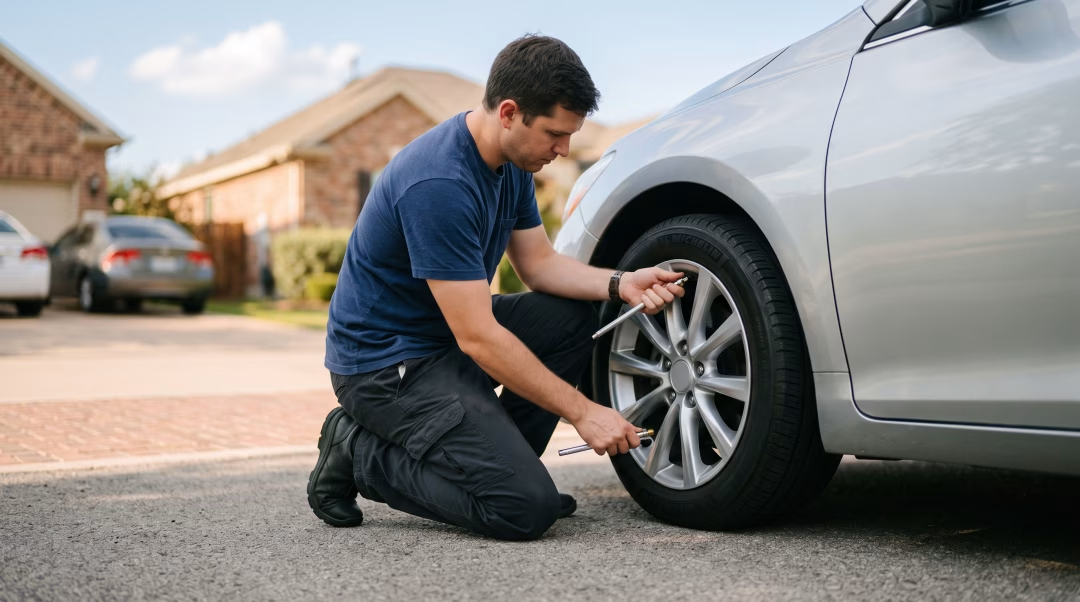
First, check your tire pressure regularly—at least once a month and before any long road trips. The most important rule is to always check the pressure when the tires are "cold," meaning the car has been parked for at least three hours or has not been driven for more than a mile. Checking pressure after driving will give you an artificially high reading due to the heat generated by friction.
Second, make sure you are inflating to the correct pressure. This number is NOT on the tire's sidewall; that figure is the maximum cold inflation pressure the tire can handle. The correct, manufacturer-recommended PSI is found on a sticker inside the driver's side door jamb, in the glove box, or in your vehicle's owner's manual. Follow this number precisely.
Third, conduct visual inspections. When you are checking the pressure, take an extra minute to walk around the car. Look for cracks in the sidewalls, any bulges or bumps that could indicate internal damage, and check for uneven tread wear. If you see these signs, it is time to have a professional inspect your tires. If you have questions, do not hesitate to contact us for advice.
Finally, remember that age matters as much as mileage. Most tire manufacturers recommend replacing tires that are between six and ten years old, regardless of how much tread is left. The rubber simply degrades over time, and the Texas sun accelerates this process. You can find your tire's manufacturing date on the sidewall as a four-digit code (e.g., "3221" means the tire was made in the 32nd week of 2021).
By integrating these simple checks into your vehicle care routine, you can mitigate the risks posed by our climate. Proper tire maintenance ensures your safety, improves your vehicle's performance, and saves you money in the long run. Whether you are looking for a reliable first car or a family SUV, ensuring the tires are in top condition is a non-negotiable part of our process before any vehicle joins our inventory for sale to drivers from Plano, Frisco, and beyond.
Should I let air out of my tires when it gets hot outside?
No, you should not let air out of your tires to compensate for the heat. Vehicle manufacturers specify a "cold" inflation pressure that accounts for the pressure increase during normal operation and hot weather. Letting air out can cause the tire to become dangerously underinflated, which generates excessive heat from friction and flexing, leading to a higher risk of a blowout than overinflation.
How much does tire pressure increase in the Texas summer?
As a general rule, tire pressure increases by about 1 PSI for every 10°F increase in temperature. On a hot Texas day, if the temperature rises 40 degrees from the cool morning to the peak afternoon, you can expect your tire pressure to increase by around 4 PSI. If the sun is directly hitting a tire, the pressure can increase even more.
Are nitrogen-filled tires better for the heat?
Nitrogen is less susceptible to expansion and contraction with temperature changes than regular air, which contains moisture. This means tire pressure in nitrogen-filled tires will remain more stable in extreme heat. While not a necessity, using nitrogen can help maintain more consistent pressure, potentially improving tire life and safety, but regular air is perfectly safe if you check your pressure consistently.
How can I protect my tires from sun damage when parked?
The best way to protect your tires from UV damage is to park in a garage or covered carport whenever possible. If you must park outside, using a quality tire dressing that contains UV protectants can help condition the rubber and block some of the harmful rays. Also, try to avoid leaving your vehicle parked in the same spot for weeks at a time, as this exposes the same section of the tires to the sun continuously.
What are the signs of a heat-related tire problem while driving?
While driving, be alert for any changes in your vehicle's handling. A sudden vibration, a pull to one side, or a "thumping" sound can indicate a developing tire issue like a bubble or tread separation, which is often aggravated by heat. If you experience any of these symptoms, pull over safely as soon as possible and inspect your tires before continuing your journey.
