

Is a Used Car with a
Rebuilt Title Worth Financing in Texas?
When you are browsing through used car inventories, you might come across vehicles with a "rebuilt" title. This label can raise questions and uncertainty, especially when you are considering financing. Is a used car with a rebuilt title worth financing, or is it a risk you should avoid? The answer isn't a simple yes or no. A rebuilt title indicates a vehicle was once declared a total loss by an insurance company, typically due to an accident, flood, or theft, and has since been professionally repaired and passed a state inspection to be deemed roadworthy again. For savvy buyers in McKinney and North Texas, this can represent a significant opportunity. These vehicles are often priced considerably lower than their clean-title counterparts, potentially putting a newer model or a better-equipped car within your budget. Understanding the pros and cons is key to making an informed decision that aligns with your financial situation.
Ultimately, the value of financing a rebuilt title vehicle comes down to the quality of the repairs and the transparency of the seller. When you work with a dealership that is upfront about a vehicle's history and has a rigorous inspection process, you can find incredible value. It is about balancing the lower cost against the potential risks. For many drivers, especially those navigating credit challenges, a carefully selected and properly financed rebuilt title car can be a smart and affordable path to reliable transportation.
Understanding Rebuilt Titles and Your Financing Options
The journey of a car to a rebuilt title is a story of recovery. It begins when an insurance company declares a vehicle a "total loss," issuing it a salvage title. This doesn't always mean the car was crumpled into an unrecognizable shape. Sometimes, the cost of repair, especially with high-tech sensors and components, simply exceeds a certain percentage of the car's market value. Once a vehicle has a salvage title, it cannot be legally driven on public roads. To return to service, it must be repaired to meet specific safety standards. After the repairs are complete, the vehicle undergoes a thorough inspection by a state-certified official. If it passes, the salvage title is replaced with a rebuilt title, signifying it is once again safe and legal to drive, register, and insure.
The Advantages of Considering a Rebuilt Title Car
The most significant advantage of purchasing a car with a rebuilt title is the price. The branding on the title permanently reduces the vehicle's market value, meaning you can often purchase one for 20-40% less than an identical model with a clean title. This price reduction opens up numerous possibilities. You might be able to afford a newer vehicle with more modern safety features, better fuel economy, or luxury amenities that would otherwise be outside your budget. For families needing a larger SUV or a reliable minivan, this discount can make a huge difference. This lower initial cost also translates to a smaller loan amount, which can result in more manageable monthly payments. If you are working to rebuild your credit, a smaller, more affordable loan can be a strategic step. To see how this might fit your budget, you can explore our in-house financing area for more information.
Navigating the Risks and Challenges
While the savings are attractive, it is crucial to approach a rebuilt title vehicle with a clear understanding of the potential risks. The primary concern is the quality of the repairs. If the work was not done to a high standard, you could face ongoing mechanical issues or even safety concerns. This is why a dealer's reputation is so important. Another factor is the vehicle's resale value. Just as you are buying it at a discount, you will also sell it at a discount. A rebuilt title car is an asset that depreciates more quickly than its clean-title equivalent. Finally, some traditional banks and credit unions are hesitant to finance rebuilt title vehicles due to the perceived risk and difficulty in assessing their true value. Similarly, some insurance companies may charge higher premiums or may not offer full coverage options. This is where a specialized lender, like a Buy Here Pay Here (BHPH) dealership, can be an invaluable partner.
How to Make a Smart Purchase: Your Due Diligence Checklist
Knowledge is your best tool when considering a rebuilt title car. Being a proactive and informed buyer can help you mitigate the risks and find a genuinely great deal on a reliable vehicle. Before you commit to financing, follow these critical steps:
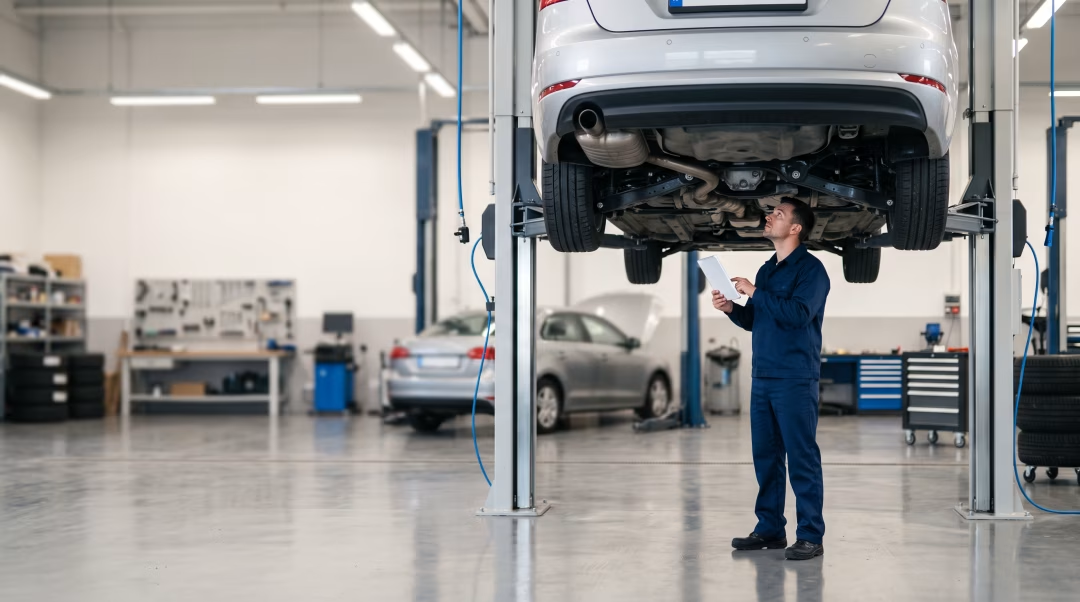
- Get a Pre-Purchase Inspection (PPI): This is the single most important step. Take the vehicle to a trusted, independent mechanic who has experience with collision repair. They can put the car on a lift and inspect the frame, suspension, and quality of the repair work in ways you cannot in a simple test drive.
- Review All Documentation: A reputable seller should be able to provide photos of the vehicle before it was repaired and a detailed list of all the work that was done and parts that were replaced. This transparency is a sign of a trustworthy dealership.
- Check the Vehicle History Report (VHR): A report from a service like CarFax or AutoCheck will provide details about the incident that led to the salvage title. It can tell you if it was a collision, flood, or theft recovery, which can help you and your mechanic know where to look for potential issues.
- Take an Extended Test Drive: Don't just drive around the block. Take the car on a variety of roads, including highways and city streets. Pay attention to how it handles, listen for unusual noises, and test all the electronic features to ensure everything is working as it should. Schedule a test drive with us to experience a vehicle firsthand.
- Discuss Financing Options Openly: Be upfront about the rebuilt title with your lender. At a BHPH dealership like ours, we understand the value and nuances of these vehicles. We base our lending decisions on your current financial stability, not just a credit score. You can even get pre-qualified online to understand your options.
By taking these steps, you transform from a hopeful buyer into an educated consumer. You will be equipped to assess the vehicle's true condition and make a decision based on facts, not just the attractive price tag. Financing a rebuilt title car can absolutely be worth it, provided you do your homework and partner with a dealer who values transparency and customer satisfaction.
Frequently Asked Questions About Rebuilt Title Financing
Can you get a loan for a car with a rebuilt title?
Yes, it is possible to get a loan for a car with a rebuilt title. While some traditional banks and credit unions may be hesitant, in-house financing dealerships, also known as Buy Here Pay Here lots, are often more experienced with these types of vehicles. They typically focus more on your income and ability to pay rather than the vehicle's title history, making them a great option for financing a rebuilt car.
Are rebuilt title cars reliable?
The reliability of a rebuilt title car depends entirely on the quality of the repairs. If a vehicle is repaired by a certified, skilled technician using high-quality parts, it can be just as reliable as a car with a clean title. This is why a pre-purchase inspection by an independent mechanic is so crucial to verify the workmanship and ensure the vehicle is structurally sound and safe.
Is insurance more expensive for a rebuilt title car in Texas?
Insurance premiums can sometimes be higher for a rebuilt title car, and some carriers may have restrictions on providing full coverage (collision and comprehensive). It is wise to get insurance quotes for the specific vehicle you are considering before you finalize the purchase. This will help you factor the cost of insurance into your overall budget and avoid any surprises.
How does a rebuilt title affect a car's value?
A rebuilt title permanently reduces a vehicle's market value, typically by 20% to 40% compared to an identical model with a clean title. While this means you can buy the car for a significantly lower price, it also means its resale value will be lower when you decide to sell or trade it in. It is an important long-term financial factor to consider.
What should I look for when inspecting a rebuilt title vehicle?
During your inspection and test drive, look for uneven gaps between body panels, mismatched paint colors, and doors or a trunk that do not close properly, as these can be signs of poor bodywork. Also, check for any warning lights on the dashboard and test all electronics. Most importantly, have a professional mechanic check for frame damage and inspect the quality of welds and repairs underneath the car.
Helpful Links
- Explore our wide selection of quality vehicles in our Used Inventory.
- Have questions about financing? Check out our Financing FAQs page.
- See how much your current vehicle is worth with our Value My Trade tool.
- Ready to start the process? Fill out our secure online Credit Application.
