

Toll Roads Near McKinney:
Budgeting For Your Commute
Living in McKinney offers a fantastic quality of life, but for many residents, commuting throughout the Dallas-Fort Worth Metroplex is a daily reality. Navigating this sprawling region often means utilizing the extensive network of North Texas toll roads. While these routes can save you significant time and reduce stress behind the wheel, the costs can add up quickly if you are not prepared. Understanding the major tollways like the Sam Rayburn Tollway and the Dallas North Tollway is the first step. The next is factoring these expenses into your total cost of vehicle ownership. Before you even begin to schedule a test drive, it is wise to consider how toll costs will impact your monthly budget. A fuel-efficient vehicle can help offset these fees, making your daily drive more affordable and predictable. Thinking about your commute ahead of time empowers you to choose a car that truly fits your lifestyle and financial picture.
At our dealership, we understand that a car payment is just one piece of your transportation budget. We live and work here too, so we know the impact of daily travel expenses. Our team is dedicated to helping you find a reliable used vehicle that not only meets your needs but also complements your financial plan, including recurring costs like tolls and fuel. By exploring the total cost of ownership, you can make a more informed decision and drive away with confidence in your purchase.
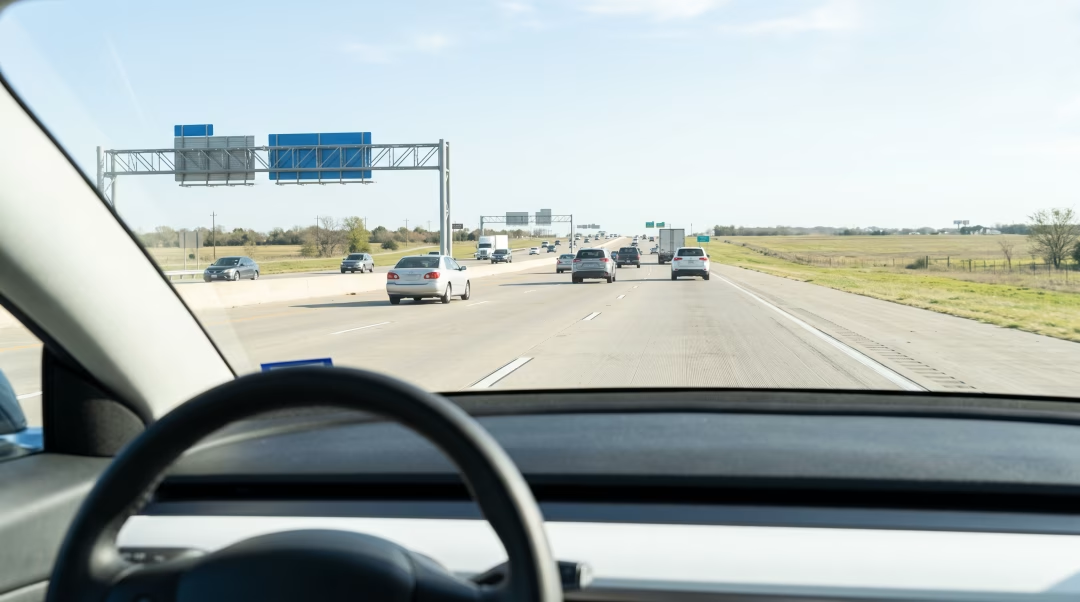
A Driver’s Guide to North Texas Tollways and Your Car Budget
The growth of McKinney and surrounding Collin County communities like Frisco, Plano, and Allen has made the region a hub for families and professionals. With this growth comes increased traffic, making the North Texas Tollway Authority (NTTA) network an essential part of daily life for many. For potential car buyers, especially those looking at in-house financing options, understanding these routes and their associated costs is critical for creating a realistic and sustainable budget.
Ignoring toll expenses can lead to financial strain, turning what seems like an affordable car payment into a monthly burden. By planning for these costs, you can better determine how much car you can truly afford. This guide will break down the primary toll roads serving McKinney drivers, explain the payment systems, and offer tips on how to integrate these costs into your car buying journey.
Major Toll Roads Serving the McKinney Area
If you live in McKinney, there are a few key tollways you will likely use depending on where you work, shop, or travel. Each serves as a major artery connecting the northern suburbs to the rest of the DFW Metroplex.
- Sam Rayburn Tollway (SRT / SH 121): This is arguably the most important east-west corridor for McKinney residents. The SRT runs from US-75 in McKinney westward through cities like Plano, Frisco, The Colony, and Lewisville, eventually connecting to I-35E. It provides a vital link to Dallas Fort Worth International Airport (DFW) and is a primary route for commuters working in the rapidly growing corporate corridors along its path.
- Dallas North Tollway (DNT): The DNT is the premier north-south route connecting Collin County directly with downtown Dallas. Starting north of US-380 in Prosper, it runs south through Frisco and Plano, providing a more direct path into the heart of Dallas than US-75. For anyone considering used cars for commuting from McKinney to Dallas, the DNT will likely be a part of their daily drive.
- President George Bush Turnpike (PGBT / SH 190): While not running directly through McKinney, the PGBT is a crucial connecting loop. It intersects with both the DNT and US-75 south of McKinney in the Richardson/Plano area. It forms a large crescent around the northern and eastern parts of Dallas, connecting suburbs like Garland, Rowlett, and Irving. If your commute takes you across the northern arc of the metroplex, you will almost certainly use the PGBT.
Understanding Toll Payment Methods: TollTag vs. ZipCash
The NTTA offers two primary ways to pay for tolls, and the method you choose has a significant impact on your overall cost. Understanding the difference is key to managing your commuting budget effectively.
The most cost-effective method is using a TollTag. This is a small electronic sticker that you place on your vehicle's windshield. When you drive through a tolling gantry, it is automatically read, and the toll is deducted from a prepaid account you set up online. TollTag users pay the lowest rates, which can be up to 50% less than the alternative. You can manage your account, add funds, and view your usage all through the NTTA website or mobile app. This is the recommended method for anyone who plans to use toll roads regularly.
If you do not have a TollTag, you will be billed through the ZipCash system. Cameras at the tolling points capture an image of your license plate, and a bill is mailed to the registered owner of the vehicle. While this requires no setup, the rates are substantially higher to cover the administrative costs of processing and mailing invoices. A single trip that might cost a couple of dollars with a TollTag could be double that via ZipCash. Forgetting to pay a ZipCash invoice on time can also lead to late fees and penalties, further increasing the cost.
Budgeting for Tolls: From Estimation to Action
Now that you know the routes and payment methods, how do you incorporate this into your budget? The first step is to estimate your usage. Use a tool like Google Maps and be sure to enable the "show toll prices" feature. Map out your daily commute to work and back. Then, consider other regular trips you take, such as to the grocery store, family activities, or appointments. Add up a typical week's worth of tolls to get a baseline.
Let's say your daily round-trip commute from McKinney to an office in Plano near the DNT and PGBT interchange costs about $5.00 with a TollTag. That is $25 per week, or roughly $100-$110 per month, just for work. Add in a few weekend trips, and you could easily be looking at $125-$150 per month in toll expenses alone. This is a significant figure that must be accounted for alongside your car payment, insurance, and fuel. Knowing this number helps you make smarter choices at the dealership. Perhaps a slightly lower car payment is better to accommodate the toll budget, or maybe you should focus on finding a more fuel-efficient vehicle. A car that gets 35 MPG instead of 25 MPG can save you a substantial amount on gas, which can then be allocated to your toll fund. This is a key part of understanding the true fuel costs in North Texas and how they fit into your overall financial picture.
When you are ready to start looking for a vehicle, you can come prepared. You can explore our used inventory with a clear understanding of your total transportation budget, not just the monthly payment you think you can handle. This knowledge is especially powerful for buyers exploring Buy Here Pay Here financing, as it demonstrates financial responsibility and a solid plan for managing all vehicle-related expenses.
Which toll road is most common for McKinney commuters?
For McKinney residents, the Sam Rayburn Tollway (SRT/121) is often the most frequently used toll road for east-west travel to places like Frisco, Plano, and DFW Airport. For north-south commutes directly into Dallas, the Dallas North Tollway (DNT) is the most common choice.
How much money can I really save by using a TollTag?
Using an NTTA TollTag can save you up to 50% compared to paying via ZipCash (mail-in invoice). The savings are significant for regular commuters. A toll that costs $1.50 with a TollTag might cost $3.00 or more via ZipCash, and those costs add up quickly over a month.
Do I have to get a new TollTag when I buy a used car?
You do not need a completely new account, but you must update your NTTA account immediately. You will need to add your new vehicle's license plate and information to your account and get a new TollTag sticker for the new car's windshield. You should also be sure to remove the old vehicle from your account to avoid being charged for tolls incurred by the new owner.
How can I estimate my monthly toll costs before I buy a car?
The best way is to use an online mapping service like Google Maps for your most common routes, such as your daily commute. Make sure the option to display toll costs is enabled. Calculate the round-trip cost and multiply it by the number of days you work per month. Then, add a buffer for weekend trips and errands to get a realistic monthly estimate.
Can choosing a fuel-efficient car help with my overall commuting costs?
Absolutely. While it does not lower the toll fees themselves, a more fuel-efficient vehicle reduces your monthly gasoline expenses. The money you save at the pump can effectively be reallocated to cover your toll budget, making the total cost of your commute more manageable and helping you stay on track with your finances.
