

Essential Transmission Care Tips
for Used Car Owners
Owning a used car is a smart investment, and protecting its most complex components is key to long-term value and reliability. Your vehicle's transmission is the heart of its drivetrain, a sophisticated system of gears and hydraulics responsible for transferring power from the engine to the wheels. Proper transmission care is one of the most effective ways to avoid premature wear and prevent costly repairs down the road. By understanding the basics of how your transmission works and adopting a few simple maintenance habits, you can significantly extend the life of your vehicle. These transmission care tips are designed for used car owners to help you keep your car running smoothly for years to come. Whether you commute from McKinney to Dallas or just run errands around town, a healthy transmission is essential for a dependable ride. Taking proactive steps now will give you peace of mind and save you money in the long run.
Here, we believe that an informed customer is a happy car owner. Our commitment to you extends beyond the sale, which is why we provide resources to help you maintain your vehicle. While we carefully inspect every car in our used inventory, ongoing care is crucial for performance and longevity. Understanding these maintenance tips empowers you to protect your investment. If you have any questions about vehicle care or our financing process, do not hesitate to contact us. Our team is always ready to assist you.
A Deep Dive into Used Car Transmission Health
The transmission is arguably one of the hardest-working parts of any vehicle, yet it is often one of the most overlooked when it comes to routine maintenance. For a used car owner, giving your transmission the attention it deserves is not just good practice, it is a critical strategy for protecting your investment. A failing transmission can lead to one of the most expensive repair bills you will ever face, sometimes costing more than the value of an older car. The good news is that with a little knowledge and proactive care, you can catch potential issues early and keep your transmission shifting smoothly for many miles.
This comprehensive guide will walk you through everything you need to know about caring for the transmission in your used vehicle. We will cover routine checks you can perform yourself, warning signs to watch for, and driving habits that can reduce wear and tear. Following these tips will help you build a solid maintenance budget and avoid unexpected surprises.
Understanding Your Transmission Fluid
Transmission fluid is the lifeblood of your transmission. It does more than just lubricate the moving parts; it also acts as a hydraulic fluid to engage clutches and shift gears, and it helps cool the entire unit. Over time, this fluid breaks down due to heat and contamination. When the fluid degrades, it loses its ability to perform these vital functions effectively, leading to increased friction, overheating, and eventual component failure.
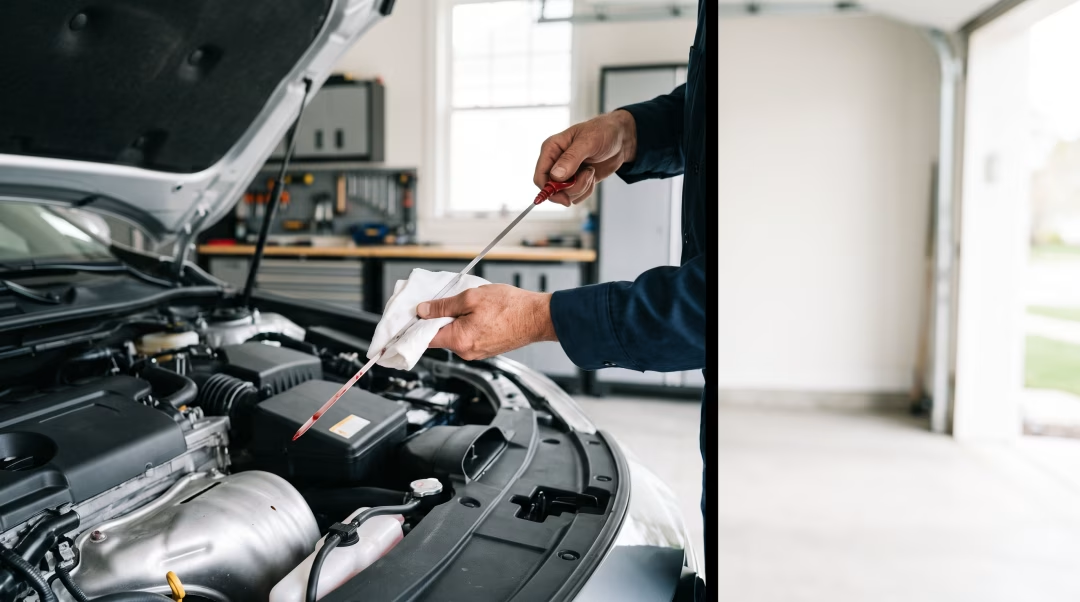
- Checking the Fluid Level: Most automatic transmission vehicles have a dipstick for checking the fluid, similar to the engine oil dipstick. It is usually located toward the back of the engine bay. The process for checking is specific: the engine should be running and warmed up, and the vehicle should be in Park or Neutral on a level surface. Pull the dipstick, wipe it clean, reinsert it fully, and pull it out again to read the level. It should be between the 'Full' and 'Add' marks.
- Inspecting Fluid Condition: The color and smell of the fluid are just as important as the level. Healthy automatic transmission fluid (ATF) is typically a bright, translucent red. If it looks dark brown, black, or cloudy, it is a sign that the fluid is old and has broken down. If it has a burnt toast smell, the transmission may be overheating. Low fluid is a sign of a leak, which needs to be addressed immediately.
Fluid Service: Drain-and-Fill vs. Flush
You will often hear two terms related to changing transmission fluid: a 'drain-and-fill' and a 'flush.' It is important to know the difference. A drain-and-fill is a simple procedure where the drain plug on the transmission pan is removed, allowing about 30-50% of the old fluid to drain out. The pan is then reinstalled, and the drained amount is replaced with new fluid. A transmission flush uses specialized equipment to pump out nearly all of the old fluid while simultaneously pumping in new fluid. While a flush is more thorough, it can sometimes be too aggressive for older, high-mileage transmissions, potentially dislodging debris that could cause blockages. For many used vehicles, a series of drain-and-fill services over time is a safer approach. Always consult your vehicle's owner's manual or a trusted mechanic for the recommended service interval and type.
Warning Signs of Transmission Trouble
Your car will often give you clues that its transmission is struggling. Learning to recognize these early warning signs can be the difference between a minor adjustment and a major overhaul. If you notice any of the following symptoms, it is time to have your vehicle inspected by a professional.
- Delayed or Harsh Shifting: If you notice a significant pause or a hard clunk when shifting from Park into Drive or Reverse, it is a classic sign of a problem. Similarly, if the transmission hesitates or shifts erratically while you are driving, it needs attention.
- Gear Slipping: This is a serious symptom where the transmission unexpectedly changes gears or pops into neutral while you are driving. The engine may rev up, but the car will not accelerate properly. This indicates significant internal wear and is a major safety concern.
- Unusual Noises: Healthy transmissions are nearly silent. Any whining, buzzing, or humming sounds that change with engine RPM could point to issues like a clogged filter, worn-out bearings, or a failing torque converter.
- Leaking Fluid: A puddle of red or brownish fluid on your driveway is a clear sign of a transmission leak. Even a small leak can lead to low fluid levels, causing overheating and severe damage.
- Check Engine Light: Do not ignore the check engine light. Modern vehicles have sensors that can detect transmission irregularities before you can feel them. A diagnostic scan can pinpoint the specific trouble code.
Driving Habits for a Longer Transmission Life
Beyond regular maintenance, the way you drive has a direct impact on the health and longevity of your transmission. Aggressive driving creates excess heat and stress, which are the primary enemies of any transmission.
First, always come to a complete stop before shifting between Drive and Reverse. Shifting while the car is still rolling in the opposite direction forces the transmission to act as a brake, putting immense strain on the internal components. Second, avoid rapid acceleration and hard braking. Smooth, gradual inputs are much easier on the drivetrain. When driving in hilly areas or towing, use the appropriate lower gears to prevent the transmission from "hunting" for the right gear, which generates extra heat. Finally, use your parking brake every time you park, especially on an incline. This allows the brake to hold the vehicle's weight, taking the stress off the small metal pin inside the transmission called the parking pawl.
By following these tips and staying vigilant for warning signs, you can help your used car's transmission provide reliable service for many years. If you are looking for a quality vehicle, we invite you to explore our inventory of reliable used cars and see how our in-house financing can work for you. Our team is ready to help you get pre-qualified today.
Frequently Asked Questions About Transmission Care
How often should I check the transmission fluid in my used car?
It is a good practice to check your automatic transmission fluid level and condition once a month. This allows you to catch any potential leaks or fluid degradation early before they can cause significant damage. If you frequently drive in harsh conditions, such as stop-and-go city traffic or extreme North Texas heat, checking it more often is advisable.
Is a transmission flush always better than a simple drain and fill?
Not necessarily, especially for older, higher-mileage vehicles. A flush replaces nearly 100% of the fluid but can sometimes dislodge sediment that might cause issues. A drain-and-fill is less aggressive and replaces about 30-50% of the fluid. For many used cars, a regular schedule of drain-and-fill services is a safer and effective way to maintain fluid quality without the risks of a high-pressure flush.
What color should my automatic transmission fluid be?
Healthy automatic transmission fluid (ATF) is a bright, translucent cherry red. As it ages, it will gradually darken to a brownish color. If your fluid is dark brown, black, or has a burnt smell, it is a clear indicator that it needs to be changed immediately as it has lost its protective properties.
Can I use any type of transmission fluid in my car?
No, this is a critical point. Different transmissions require very specific types of fluid with unique additives and viscosity ratings. Using the wrong fluid can lead to poor shifting, overheating, and catastrophic failure. Always consult your vehicle's owner's manual or a trusted mechanic to confirm the exact type of ATF your car needs before adding or changing the fluid.
Does my driving style really make a difference for my transmission?
Absolutely. Aggressive driving habits like hard acceleration, abrupt stops, and shifting from drive to reverse while still moving create a tremendous amount of heat and stress on the transmission's internal components. Driving smoothly, allowing the vehicle to come to a complete stop before changing directions, and using the parking brake all contribute significantly to reducing wear and tear and extending the life of your transmission.
