

Check Engine Light Basics for
New and Used Car Owners
For any new or used car owner, seeing that small, amber engine-shaped symbol light up on the dashboard can cause instant anxiety. What does it mean? Is it serious? How much will it cost? The check engine light, officially known as the Malfunction Indicator Lamp (MIL), is your vehicle's primary way of telling you that something is not right with its onboard diagnostics system. It could signal anything from a simple issue, like a loose gas cap, to a more complex problem within the engine or emissions system. Understanding the basics of this important warning light is a crucial step toward becoming a more confident and informed vehicle owner. Especially when you are navigating the world of pre-owned vehicles, knowing what this light signifies gives you peace of mind and helps you make smarter decisions about vehicle care and maintenance, ensuring your car remains a reliable partner on the road for years to come.
At our dealership, we believe an informed customer is a happy customer. We take pride in the quality and reliability of the vehicles we offer, which is why every car in our used inventory undergoes a thorough inspection process. We want you to drive off our lot with complete confidence, not worrying about what a future dashboard light might mean. Our team is always here to answer your questions, whether you are just starting your search or need advice long after your purchase. We are committed to transparency and helping you understand your vehicle inside and out.
A Deeper Dive Into Your Vehicle's Most Misunderstood Warning
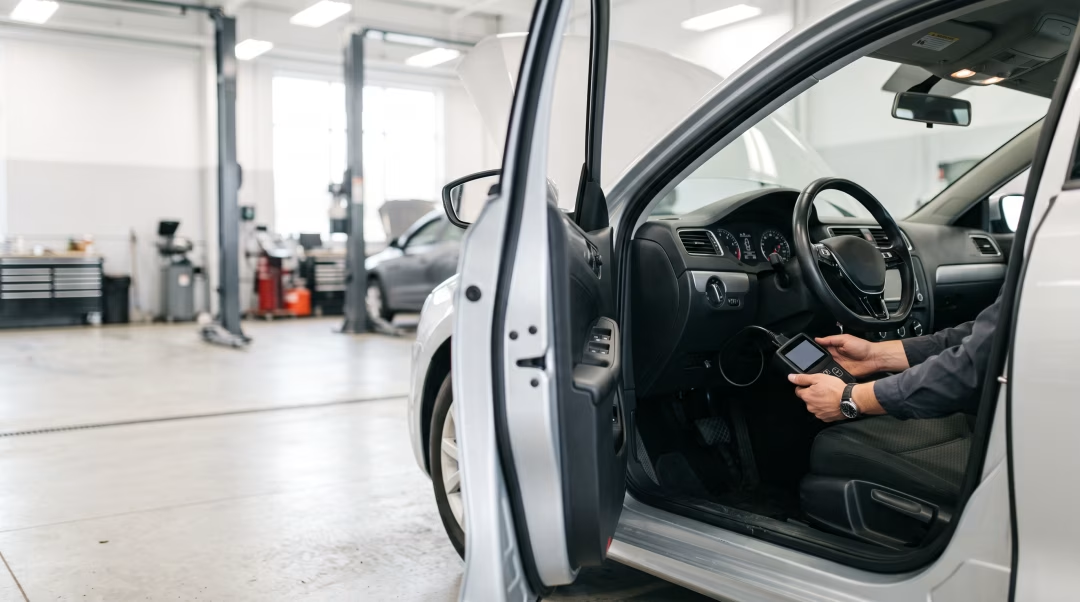
The check engine light is a key feature of the Onboard Diagnostics (OBD-II) system, which is standard on all vehicles manufactured since 1996. This system is a sophisticated network of sensors and computers that monitor the performance of your vehicle's most essential components, including the engine, transmission, and emissions system. The vehicle's main computer, often called the Powertrain Control Module (PCM) or Engine Control Unit (ECU), constantly receives data from these sensors. If the computer detects a reading that falls outside of the normal operating parameters, it triggers the check engine light and stores a Diagnostic Trouble Code (DTC) in its memory. This code corresponds to the specific issue the system has identified, acting as a starting point for a technician to diagnose the problem.
Solid vs. Flashing: A Critical Distinction Every Driver Should Know
Not all check engine light warnings are created equal. The way the light behaves tells you a lot about the severity of the problem. If the light is solid and steady, it indicates a non-emergency issue has been detected. While you should not ignore it, you do not need to pull over immediately. The problem could be minor, but leaving it unaddressed could lead to more significant issues or reduced fuel economy over time. You should plan to have the vehicle checked by a professional at your earliest convenience.
However, if the check engine light is flashing or blinking, it signals a severe and potentially engine-damaging problem. This usually indicates a serious engine misfire, where unburned fuel is being dumped into the exhaust system. This can rapidly overheat and destroy the catalytic converter, a very expensive component to replace. If you see a flashing check engine light, you should reduce your speed, avoid heavy acceleration, and get the vehicle to a safe location to be serviced as soon as possible. Continuing to drive with a flashing light can cause catastrophic damage.
Common Culprits That Trigger the Check Engine Light
While the possibilities are numerous, a few common issues account for a large percentage of check engine light illuminations. Understanding these can help demystify the warning and give you a better idea of what might be happening under the hood.
- Loose or Faulty Gas Cap: This is one of the simplest and most common causes. A loose, cracked, or missing gas cap can disrupt the fuel system's pressure, triggering an evaporative emissions system code. Always make sure you tighten your cap until it clicks.
- Failing Oxygen (O2) Sensor: This sensor measures the amount of unburned oxygen in your exhaust. This data helps the computer adjust the fuel mixture for optimal efficiency. A failing sensor can lead to poor fuel economy and damage to spark plugs and the catalytic converter.
- Bad Spark Plugs or Wires: Spark plugs ignite the air and fuel mixture in the engine's cylinders. Worn-out plugs or faulty plug wires can cause an engine misfire, which will trigger the light, reduce power, and hurt fuel economy. This is a key part of any good used car maintenance schedule.
- Failing Catalytic Converter: The "cat" converts harmful carbon monoxide into less harmful emissions. It usually only fails when another problem, like bad spark plugs or a faulty O2 sensor, is ignored for too long. This is one of the most expensive repairs associated with the check engine light.
- Mass Airflow (MAF) Sensor Issues: The MAF sensor measures the amount of air entering the engine, helping the computer calculate the right amount of fuel to inject. A faulty sensor can cause stalling, rough idling, and poor acceleration.
What to Do When the Light Comes On
Seeing the light can be startling, but having a clear plan helps. First, assess the situation. Is the light solid or flashing? Note any changes in how the vehicle is performing. Is it shaking, making strange noises, or losing power? If the light is flashing or you notice serious performance issues, pull over safely and call for assistance. If the light is solid and the car seems to be running normally, your first step should be to check the gas cap. Tighten it and continue driving. Sometimes it takes a few drive cycles for the light to reset itself after the cap is secured. If the light remains on, the next step is to have the codes read. Many national auto parts stores offer this service for free. An OBD-II code scanner will retrieve the DTC, giving you a valuable clue about the source of the problem. Remember, a code is not a diagnosis. A code pointing to an O2 sensor does not automatically mean the sensor itself is bad; it means the system is getting a reading from that sensor that is out of spec, which could be caused by other issues. For a proper diagnosis, it is always best to consult a trusted mechanic. If you have any questions, please do not hesitate to contact us for guidance.
Frequently Asked Questions About the Check Engine Light
Can I continue to drive my car with the check engine light on?
If the light is solid and the car is driving normally without any strange sounds, smells, or performance loss, you can typically continue driving for a short time. However, you should get it checked as soon as possible to prevent a minor issue from becoming a major one. If the light is flashing, you should pull over and stop driving as soon as it is safe to do so to avoid severe engine damage.
Will disconnecting the battery turn off the check engine light?
Disconnecting the battery will often clear the computer's memory and turn off the check engine light temporarily. However, this is not a fix. It erases the diagnostic trouble codes that a mechanic needs to identify the problem. The light will almost certainly come back on once the onboard computer re-detects the fault, which could happen within a few miles.
How much does it cost to diagnose a check engine light?
The cost for a professional diagnosis can vary. Many repair shops charge a diagnostic fee, often around one hour of labor, to thoroughly investigate the cause of the code. This goes beyond simply reading the code, involving testing components to pinpoint the exact failure. While some auto parts stores read the code for free, this does not replace a full diagnosis from a qualified technician.
Does a check engine light mean my car will fail its Texas state inspection?
Yes, in Texas, an illuminated check engine light is an automatic failure for the emissions portion of the annual state vehicle inspection. The issue causing the light to be on must be properly repaired and the light must be off for the vehicle to pass inspection.
Can a change in weather cause the check engine light to come on?
While weather itself does not directly cause the light to come on, sudden changes in humidity, temperature, or air pressure can sometimes exacerbate pre-existing, borderline issues with sensors. For example, high humidity could introduce moisture into a sensor with a failing seal, causing it to send an incorrect reading to the computer and trigger the light.
