

Key Signs Your Used
Car Needs Brake Service
Your vehicle's braking system is arguably its most critical safety feature. For owners of pre-owned vehicles, being attuned to the signs of brake wear is essential for maintaining safety and preventing more expensive repairs down the road. Brakes rarely fail without warning; they provide a series of sensory clues that signal a need for attention. From high-pitched squeals when you press the pedal to a strange vibration through the steering wheel, your car is communicating. Learning to interpret these signals is a key part of responsible car ownership. Ignoring these early warnings can compromise your ability to stop effectively, especially in an emergency. Paying attention to how your brakes sound, feel, and perform is the first step toward ensuring you and your passengers remain safe on every journey. This guide will walk you through the most common indicators that your used car is due for a professional brake inspection.
Recognizing the early warning signs of brake trouble empowers you to take action before a minor issue becomes a major safety concern. A simple inspection can often catch wear and tear, saving you from the stress and higher cost of a significant component failure. By understanding the noises, sensations, and visual cues detailed below, you can confidently determine when it is time to seek professional service. Proactive maintenance is always more effective and affordable than reactive repair, especially when it comes to your car's most important safety system.
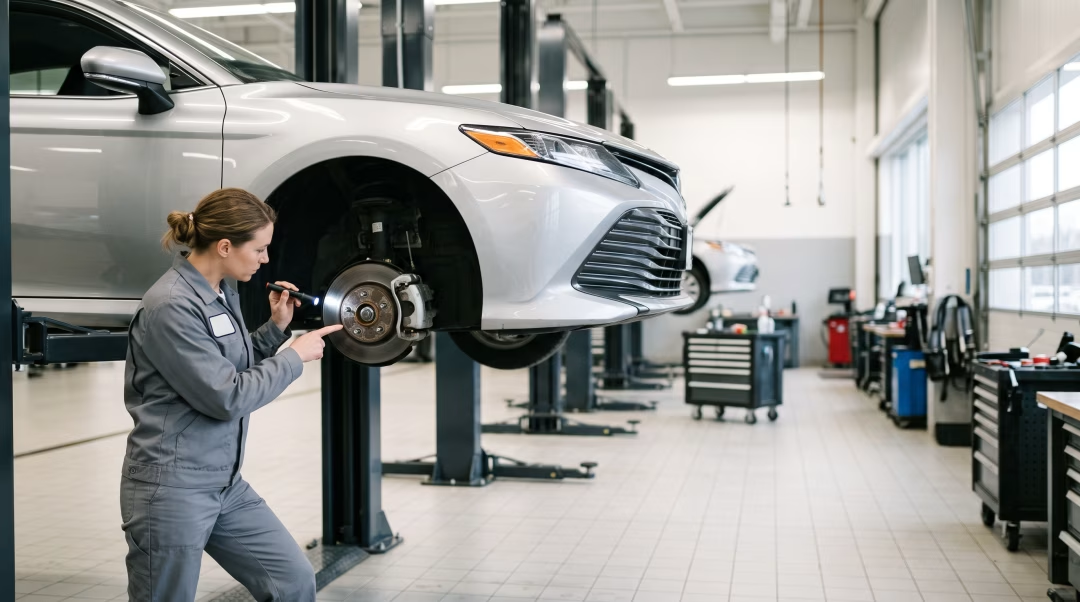
Listen: The Sounds of a Braking System in Need of Service
Your ears are often the first line of defense in detecting brake problems. Modern brake systems are designed with built-in indicators to alert you when service is required. Paying attention to new or unusual noises can help you diagnose an issue early.
- High-Pitched Squealing or Screeching: This is the most common and often the earliest sign of brake wear. Most brake pads are manufactured with a small metal tab called a wear indicator. When the pad material wears down to a certain level, this tab makes contact with the rotor, creating a loud squealing noise whenever you apply the brakes. It is a built-in alarm telling you it is time for new pads.
- Grinding or Growling: If you hear a deep, metallic grinding sound, it is a sign of a more severe problem. This noise typically means the brake pads have worn down completely, and the metal backing plate is now grinding against the metal rotor. This metal-on-metal contact can quickly destroy the rotor, turning a routine pad replacement into a much more expensive repair. If you hear grinding, seek service immediately.
- Clicking or Ticking: A consistent clicking noise when you apply or release the brake pedal can sometimes indicate that the brake pads are loose in their mountings or that the hardware holding them in place needs to be serviced or replaced.
Feel: Sensations That Signal Brake Trouble
Beyond sounds, the way your brake pedal and vehicle feel during braking can provide significant clues about the health of your braking system. Any change from the normal, smooth operation you are used to should be investigated.
One of the most concerning feelings is a soft or "spongy" brake pedal. If your pedal goes down further than usual or feels mushy when you press it, this could indicate air or moisture in the brake lines or a problem with the master cylinder. Since your brakes operate on a hydraulic system, a spongy pedal means the system is not building adequate pressure to stop the car effectively. Conversely, a pedal that feels extremely hard and difficult to press might point to an issue with the power brake booster, which assists you in applying pressure.
Another common symptom is vibration. If you feel a pulsating or vibrating sensation through the brake pedal or steering wheel when you slow down, it is often a sign of warped brake rotors. Rotors can become uneven over time due to intense heat from heavy braking. When the pads press against this uneven surface, it creates the shuddering you feel. Lastly, if your vehicle pulls to one side when you brake, it suggests the brakes are not applying force evenly. This could be caused by a stuck brake caliper on one side, a collapsed brake hose, or unevenly worn brake pads.
Look: Visual Cues Your Brakes Need Attention
You do not have to be a mechanic to spot some of the visual signs of brake problems. A few quick checks can reveal a lot about your brake system's condition. The most obvious sign is the brake warning light on your dashboard. This light can indicate several issues, from low brake fluid to a problem with the anti-lock braking system (ABS). Never ignore this warning light. Consult your owner's manual to understand what the specific light means and have it checked by a professional.
You can also perform a quick visual inspection of the brake pads and fluid. Depending on your wheel design, you may be able to see the brake pad through the spokes. A healthy brake pad will have a visible amount of friction material, typically at least a quarter-inch thick. If the pad looks very thin, it is nearly time for a replacement. Under the hood, you can check the brake fluid reservoir. If the fluid level is low, it could indicate a leak in the system or that your brake pads are very worn (as pads wear, the calipers extend, drawing more fluid from the reservoir). Brake fluid should be nearly clear to light amber in color. If it appears dark and murky, it may be contaminated and need to be flushed and replaced.
Why Timely Brake Service Matters
Addressing brake issues promptly is crucial for two main reasons: safety and cost. Your ability to stop quickly and predictably is fundamental to safe driving. Worn or malfunctioning brakes can significantly increase your stopping distance, which can be the difference in avoiding a collision. This is a key reason why understanding a vehicle's condition is so important when browsing any used inventory.
From a financial perspective, ignoring early warnings leads to more extensive and expensive damage. The squealing from a wear indicator is a call to replace your brake pads, a relatively inexpensive service. If you ignore that and continue driving until you hear grinding, you have likely damaged the rotors as well, potentially doubling or tripling the repair bill. A small leak in a brake hose is simple to fix, but if it leads to a complete loss of brake fluid, it can cause master cylinder failure. Proactive maintenance is always the more affordable path. Learning about these checks is part of our commitment to helping drivers, much like our used car inspection guide.
Frequently Asked Questions About Brake Service
How often should I have my brakes inspected?
It is a good practice to have your brakes inspected at least once a year or every 12,000 miles. A common and convenient time to do this is during a routine tire rotation, as the wheels are already off the vehicle, making a visual inspection of the pads and rotors easy for a technician.
What is the difference between brake pads and rotors?
Brake pads are the friction material that presses against the rotors to create the force that stops your car. The rotors are the metal discs that the wheels are attached to. Think of it like a bicycle: the pads are the rubber blocks, and the rotor is the wheel's metal rim.
Can I drive my car if the brake warning light is on?
It is strongly advised not to drive your vehicle if the brake warning light is illuminated. This light indicates a potential problem with the braking system, such as low fluid or a hydraulic system failure. Driving could be unsafe. You should have the vehicle inspected by a professional as soon as possible.
Are squeaky brakes always a sign of a serious problem?
Not always, but they should never be ignored. Sometimes, light squeaking can be caused by moisture, light rust on the rotors after rain, or certain types of brake pad materials. However, a persistent, loud squeal usually indicates the wear indicators are making contact, meaning it is time for new pads.
What does a typical brake service involve?
A standard brake service includes replacing the brake pads and sometimes the rotors if they are worn below a safe thickness or are warped. A technician will also clean and lubricate the brake calipers and mounting hardware, and may recommend a brake fluid flush if the fluid is old or contaminated.
