

Trading In a Car with High
Mileage: What You Need to Know
Many drivers believe that once the odometer rolls past 100,000 miles, their vehicle's trade-in value disappears. This is a common misconception that can prevent you from getting the credit you deserve for your well-traveled car. At our dealership, we understand that modern vehicles are built to last, and a high mileage number does not automatically mean a low value. The truth is, your car, truck, or SUV still has significant worth that can be applied toward your next purchase. We specialize in evaluating vehicles of all ages and mileages, focusing on the overall condition, maintenance history, and current market demand. Don't count your car out just because it has seen a lot of road. Let our experienced team provide a transparent, fair assessment and show you how trading in a car with high mileage can be a smart and simple way to lower the payments on a newer, more reliable vehicle from our inventory.
Now that you understand your high-mileage vehicle has real value, the next step is discovering exactly what it is worth. Our process is designed to be quick, easy, and transparent. By using your trade-in as a down payment, you can significantly improve your financing options and lower your monthly payments. We invite you to explore our extensive used-inventory to find the perfect replacement vehicle that fits your lifestyle and budget. Our team is ready to help you navigate every step of the journey with confidence.
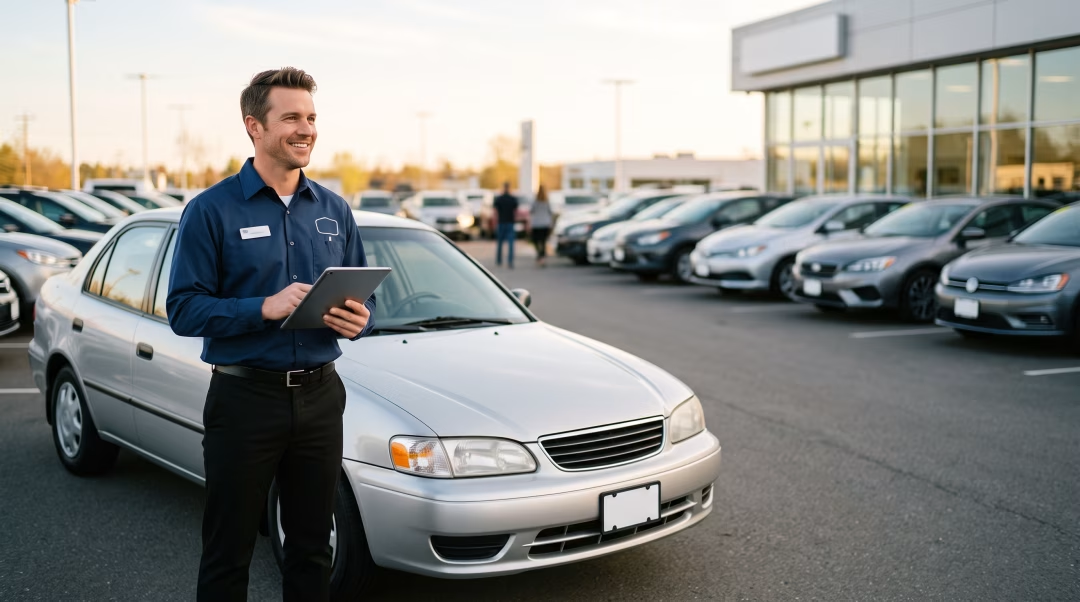
Understanding the True Value of Your High-Mileage Vehicle
In today's automotive landscape, the term "high mileage" has evolved. Not long ago, a car with 100,000 miles was considered to be near the end of its useful life. However, thanks to incredible advancements in engineering, manufacturing, and lubricants, it is now common to see vehicles running strong well past 200,000 miles. This improved longevity means that your older car is likely worth much more than you think. When you are considering valuing your trade, it is important to look beyond the odometer reading and consider the factors that truly determine its market value.
We believe in making fair offers based on a comprehensive evaluation of your vehicle. Unlike private sales that can be time-consuming and filled with uncertainty, trading in your vehicle with us is a straightforward process. You avoid the hassle of listing the car, meeting with strangers, and handling complex paperwork. Instead, you can apply your car's value directly to your next purchase, which can even provide sales tax benefits in Texas. This is a key advantage that is often overlooked when comparing a trade-in to a private sale.
Key Factors That Influence Your Trade-In Offer
Several key elements contribute to the final trade-in value of a high-mileage vehicle. Our appraisal team looks at the complete picture to give you a competitive and accurate offer.
- Make, Model, and Year: Certain brands, like Toyota and Honda, have a well-earned reputation for reliability and tend to hold their value exceptionally well, even with high mileage. Similarly, popular models in the North Texas market, such as pickup trucks and family SUVs, often have higher demand, which positively impacts their value.
- Overall Condition: This is one of the most critical factors. We assess the exterior for significant dents, scratches, or rust. The interior condition is just as important; a clean, well-kept cabin without rips, stains, or strong odors indicates a well-cared-for vehicle. A car that looks good for its age will always command a better price.
- Mechanical Fitness: How does the car run and drive? Our team will check the engine, transmission, brakes, and suspension. If the vehicle runs smoothly, does not make unusual noises, and has no active warning lights (like the check engine light), its value will be higher. Learn more about if high-mileage used cars are a smart buy or risky on our blog.
- Maintenance History: A documented history of regular maintenance is proof that your vehicle has been properly maintained. Records of oil changes, tire rotations, and other scheduled services show that you have invested in the car's longevity, which adds significant confidence and value to your trade-in.
- Recent Repairs and Features: Have you recently invested in new tires, a new battery, or new brakes? These items contribute to the vehicle's immediate usability and can increase its value. Desirable features like a sunroof, leather seats, or an advanced infotainment system also play a role.
How to Prepare Your Car for a Trade-In Appraisal
While you do not need to spend a lot of money preparing your vehicle, a few simple steps can make a positive impression and help you get the best possible offer. First impressions matter, even with an older vehicle.
Start by giving your car a thorough cleaning, both inside and out. Remove all personal belongings, vacuum the carpets and seats, and wipe down all surfaces. A clean, fresh-smelling interior suggests that the car has been well-maintained. On the outside, a simple wash and wax can make the paint shine and minimize the appearance of minor scratches. Do not forget to clean the windows and tires.
Next, gather all your important documents. This includes the vehicle's title, registration, and any service records you have. Having a folder with maintenance receipts shows you have been a responsible owner. If you have a spare key, be sure to bring it with you, as having two sets of keys can slightly increase the vehicle's value. You can find more details in our guide on the paperwork you need to trade in a car in Texas.
Finally, address any very minor issues if it is cost-effective. Topping off fluids or replacing a burnt-out brake light bulb are small, inexpensive fixes that show attention to detail. However, avoid undertaking major, costly repairs. You will rarely recoup the full cost of a significant repair in your trade-in value. It is better to let us know about the issue during the appraisal; our team is equipped to handle these repairs more efficiently.
The Simple Trade-In Process at Our McKinney Dealership
We aim to make the trade-in process as seamless as possible for drivers from all over Collin County and beyond. It starts when you bring your vehicle to one of our locations. Our professional appraiser will conduct a careful inspection, which typically includes a short test drive and a review of the vehicle's overall condition. While this is happening, you are welcome to browse our inventory of quality used cars.
Once the appraisal is complete, we will present you with a no-obligation offer. This offer is based on the factors mentioned above and current market data. You can then decide how you would like to proceed. The value of your trade-in can serve as an excellent down payment for your next vehicle. A larger down payment can help lower your monthly payments and improve your financing options, which is especially helpful for buyers who are working on rebuilding their credit.
If you accept the offer, our team will handle all the necessary title and registration paperwork. We make it easy to transition from your old car to your new one, often on the same day. This hassle-free experience is a primary reason why many people from McKinney, Allen, and Plano choose to trade with us rather than attempt a private sale.
Frequently Asked Questions About High-Mileage Trade-Ins
Is my car with over 150,000 miles still worth trading in?
Absolutely. While the value will be lower than a comparable model with fewer miles, a vehicle with 150,000 miles or more definitely has value. Its worth depends heavily on its condition, brand reputation, and maintenance history. Trucks and SUVs, in particular, often retain considerable value even with higher mileage due to high demand.
Should I make expensive repairs before I trade in my car?
In most cases, no. You are unlikely to recover the full cost of major repairs like a new transmission or significant engine work in the trade-in offer. It is more cost-effective to trade the vehicle in as-is. We can perform those repairs at a lower cost and factor that into our appraisal, which usually results in a better financial outcome for you.
What documents do I need to trade in my car in Texas?
To trade in your car, you will need the vehicle's title (the legal document proving ownership), your driver's license, and proof of current auto insurance. If you still have a loan on the vehicle, bring your loan account information and the lender's name. Having service records is also very helpful. For more information check out our guide on what paperwork you need to trade in a car in Texas.
Can I trade in a high-mileage car if I still owe money on it?
Yes, you can. We do this every day. We will appraise your vehicle and determine its value. Then, we will contact your lender to get the exact payoff amount. The vehicle's value is applied to the loan balance. If your car is worth more than you owe, you can use that positive equity as a down payment. If you owe more than it is worth (negative equity), we can often roll that amount into the financing for your next car. Learn more on our page about trading in a car with negative equity.
How does a trade-in help with getting financing for my next vehicle?
A trade-in acts as a down payment. At a Buy Here Pay Here dealership, the down payment is a key part of the approval process. A substantial down payment from your trade-in reduces the total amount you need to finance, which can lead to lower monthly payments and makes it easier to fit a vehicle into your budget. This demonstrates stability and can be a positive factor in the financing decision. Explore our financing area to learn more.
