

How Dealers Calculate
Your Car's Trade-In Value
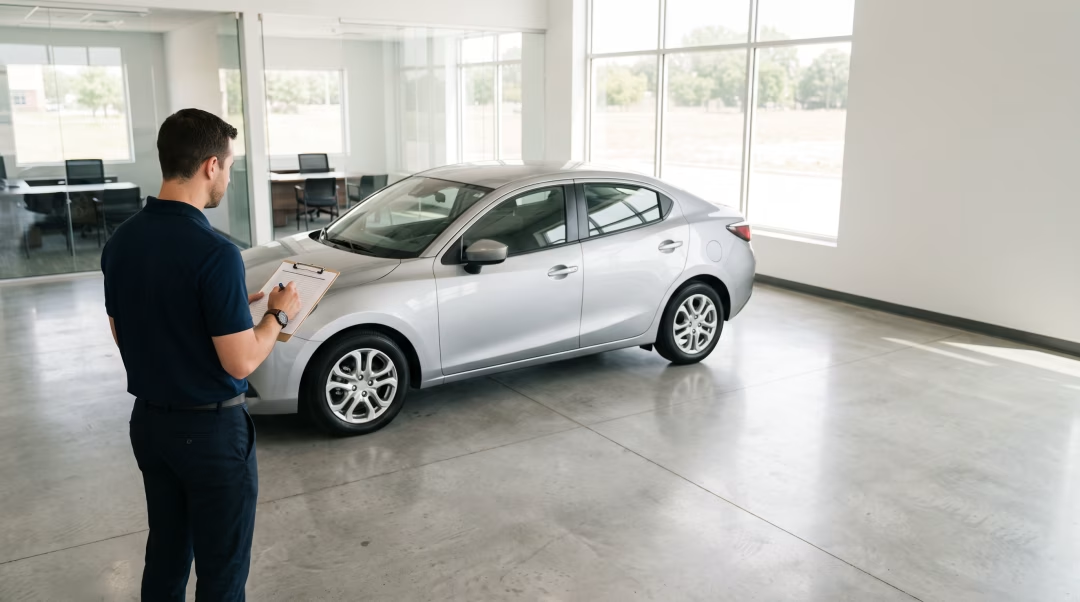
Understanding how dealers calculate trade-in value can feel like a complex puzzle, but it is a straightforward process based on data and a detailed vehicle assessment. When you bring your car to us, our appraisal team looks beyond the surface to determine its true market worth. We start with objective data from industry valuation guides, which provide a baseline based on your vehicle's year, make, model, mileage, and trim level. Then, we conduct a thorough hands-on inspection to evaluate its specific condition, inside and out. We also consider current local market demand in the McKinney area, as popular models may command a higher value. This multi-step approach allows us to provide a fair and transparent offer that reflects your car's real-time value. Our goal is to make the process clear and help you leverage your current vehicle's equity toward your next purchase from our used inventory.
Putting your trade-in value toward your next vehicle is one of the smartest ways to lower your monthly payments and reduce the total amount you finance. We make this process seamless. The value we offer for your car can be used directly as a down payment, simplifying your transaction and getting you behind the wheel of a quality pre-owned car faster. We believe in transparency and will walk you through our appraisal, explaining how we arrived at the final number so you can feel confident in your decision.
A Deeper Look into the Trade-In Appraisal Process
Getting a fair offer for your trade-in is a key part of the car buying journey. While online estimators can give you a general idea, the final offer from a dealership is based on a detailed, in-person evaluation. Dealers invest their own money into acquiring trade-ins, so they have a methodical system to determine what a vehicle is worth to them and how much they will need to invest to make it ready for sale. Understanding this process empowers you as a consumer. Let's break down the primary factors that determine your vehicle's trade-in value.
Phase 1: Starting with the Wholesale Market Value
Before we even see your car, we start with its wholesale value, also known as the Actual Cash Value (ACV). This is not the same as the retail price you see on a car for sale. The ACV is the value of the vehicle in the current wholesale market, which is what a dealer might pay for it at a dealer-only auction. To find this number, appraisers use several industry-standard resources:
- Black Book: This is a primary tool for dealers, updated frequently to reflect real-time auction data. It provides up-to-date wholesale values that are not typically seen by the general public.
- NADAguides: The National Automobile Dealers Association guide provides values that are widely used by banks and lenders for determining loan amounts.
- Kelley Blue Book (KBB): While KBB is a valuable tool for consumers, dealers often use its "Value in Trade" figures as another data point in their overall assessment.
These guides provide a starting point based on your car's make, model, year, trim, and mileage. This initial number, however, is adjusted based on the next crucial phase: the physical inspection.
Phase 2: The Hands-On Vehicle Inspection
This is where an experienced appraiser's expertise comes into play. They will conduct a walk-around and test drive to assess the vehicle's true condition. Every aspect that could affect its safety, reliability, or appearance is carefully noted. Knowing what to look for on a used car test drive can help you see your car from a dealer's perspective.
Exterior Assessment: The appraiser will check for scratches, dings, dents, and signs of rust. They will look at the quality of the paint—is it faded, or are there signs of a cheap repaint job? The condition of the tires is a major factor; worn-out tires will need to be replaced. They will also inspect the windshield and windows for any cracks or chips.
Interior Assessment: The inside of the car is just as important. Appraisers check for tears, stains, or burns in the upholstery. They will look for cracks in the dashboard and assess the overall cleanliness. Lingering odors from smoke or pets can significantly reduce a vehicle's value, as they are difficult to remove. Finally, they will test all the electronics, including the radio, power windows, sunroof, and air conditioning system.
Mechanical Assessment: During a short test drive, the appraiser listens for any unusual noises from the engine or transmission. They will feel for any issues with shifting, braking, or alignment. Popping the hood, they will look for signs of fluid leaks, cracked belts, or corrosion on the battery. Any illuminated dashboard warning lights, like the "Check Engine" light, are immediate red flags that will require further diagnosis and will impact the offer.
Phase 3: Uncovering the Vehicle's History
A car's past plays a huge role in its present value. We will almost always pull a Vehicle History Report (VHR) from a service like CarFax or AutoCheck. This report provides critical information that is not visible during a physical inspection. Understanding why you should get a vehicle history report is vital for any car buyer or seller. The VHR reveals:
- Accident History: Any reported accidents, from minor fender-benders to major collisions, will lower the value.
- Title Status: A "clean" title is expected. A "salvage" or "rebuilt" title drastically reduces the value, and many dealers will not accept them on trade.
- Number of Owners: A one-owner car with consistent maintenance records is typically more desirable than a vehicle that has passed through many hands.
- Service Records: A documented history of regular oil changes and maintenance shows the vehicle was well-cared for and adds to its value.
Phase 4: Factoring in Reconditioning and Market Costs
After the appraisal, the dealer must calculate the cost to get the vehicle "front-line ready." This is the reconditioning cost, and it is subtracted from the wholesale value. If you are trading in a car with mechanical problems, these repair costs will be a significant factor. Reconditioning includes:
Mechanical Repairs: Replacing worn brakes, buying a new set of tires, fixing an AC system, or addressing any engine issues found during inspection.
Cosmetic Repairs: Using paintless dent removal for dings, touching up paint scratches, and repairing any interior damage.
Detailing: A comprehensive, professional cleaning of the interior and exterior to make the car presentable for sale.
Beyond reconditioning, the dealer also considers the local market. In North Texas, for example, trucks and SUVs are consistently in high demand. A popular model like a used Ford F-150 or a used Chevrolet Tahoe may receive a stronger offer than a small sedan that is less popular in the area. This is simple supply and demand. The dealer evaluates how quickly they can sell the vehicle and what their potential profit margin is after all costs are considered.
The Final Offer: Putting It All Together
The final trade-in offer is the result of this comprehensive process. It starts with the wholesale value, then adjusts for condition, history, local market desirability, and the estimated cost of reconditioning. The result is a real-world value that allows the dealer to prepare the car for its next owner while managing their business risk. By understanding these steps, you can better prepare your vehicle for trade-in and have a more informed and confident conversation when you visit the dealership. For an initial estimate of what your vehicle might be worth, you can use our online value my trade tool today.
Can I trade in a car that I am still making payments on?
Yes, you can absolutely trade in a vehicle that still has an outstanding loan. We will calculate your vehicle's trade-in value and then contact your lender to get a payoff amount. The trade-in value is then applied to the loan balance. If the value is more than you owe, you have positive equity that can be used as a down payment. If you owe more than the car is worth (negative equity), the difference can often be rolled into your new financing package. Our team in our financing area can explain this in detail.
Does high mileage significantly lower my trade-in value?
Mileage is one of the most significant factors in determining a car's value. Generally, higher mileage leads to a lower trade-in value because it indicates more wear and tear on the vehicle's components. However, a well-maintained high-mileage vehicle with complete service records can often be worth more than a lower-mileage car that has been neglected. The overall condition and maintenance history are just as important as the number on the odometer.
Should I fix cosmetic or mechanical issues before trading my car in?
This depends on the issue. For minor cosmetic fixes like small scratches or dings, you are unlikely to recoup the full cost of the repair in a higher trade-in value. Dealers can often perform these repairs at a lower cost than you can. However, if the "Check Engine" light is on or there is a known mechanical issue, it can create uncertainty for the appraiser, potentially leading to a lower offer. It is often best to discuss any known issues transparently during the appraisal.
How can I get the best possible trade-in value for my car?
To maximize your offer, focus on presentation and documentation. A guide on cleaning and prepping your car before a trade-in can be very helpful. Thoroughly clean your car inside and out. Gather all your service records to demonstrate a history of regular maintenance. Also, make sure you have both sets of keys, the owner's manual, and a clean title on hand. A well-presented, well-documented vehicle gives the appraiser confidence in its condition and history.
What paperwork do I need to trade in my car in Texas?
To complete a trade-in in Texas, you will typically need a few key documents. The most important is the vehicle's title; if you have a loan, the lender holds the title, and we will coordinate with them. You will also need your valid, government-issued photo ID, proof of current auto insurance, and the vehicle's current registration. If you have paid off your loan, be sure to bring the lien release document from your lender.
Helpful Links
- Ready for an estimate? Value My Trade
- Explore our quality vehicles: Used Inventory
- Learn about our financing options: Our Financing Area
- Have more questions? Contact Us
